Cloud Voice for Modern Business Communications
Inzo Technologies helps businesses move from aging phone systems and disconnected tools to a cloud voice environment that is easier to support, more reliable day to day, and better aligned with offices, remote teams, mobile users, and multi-site operations.
We bring over 35 years of voice experience and a U.S.-based team that stays involved from planning through ongoing support, with a practical understanding of how communications fits into the broader technology environment.
A modern business phone system without the friction of an aging one
Cloud voice moves business calling out of the server closet and into a managed cloud environment. Instead of relying on aging on-premise hardware, separate meeting tools, mobile workarounds, and overlapping carrier bills, businesses get one communications foundation that is easier to support and adapt over time.
For most organizations, that means faster administration, cleaner support for remote and mobile users, more flexible routing, and a better long-term path than waiting for hardware, software, or contract pressure to force a decision.
What cloud voice improves
Day-to-day reliability
Calling that works more cleanly across devices, users, and locations.
Support desk phones, softphones, and mobile users in one environment that is easier to maintain than aging on-premise hardware and one-off workarounds.
Simpler administration
Make updates faster without turning every change into a vendor project.
Handle moves, adds, changes, routing, and user management more efficiently without relying on aging hardware or layered vendor dependencies.
A cleaner long-term path
Build a stronger communications foundation for what comes next.
Improve continuity, mobility, reporting, messaging, and future integrations without rebuilding your communication stack again in a few years.
Why businesses move to cloud voice
Most businesses we work with change because the old setup starts creating friction. Support gets harder. Remote users need workarounds. Carrier costs pile up. Hardware ages. Changes take too long. The system still works, but not as cleanly, flexibly, or confidently as the business now needs it to.
- Aging PBX or phone hardware
- Rising maintenance or support costs
- Remote and hybrid work friction
- Multiple vendors, bills, and overlapping tools
- Slow moves, adds, and changes
- Limited mobility and continuity options
- Lifecycle pressure from older software and hardware
- A growing need for cleaner administration and stronger support
What cloud voice actually means
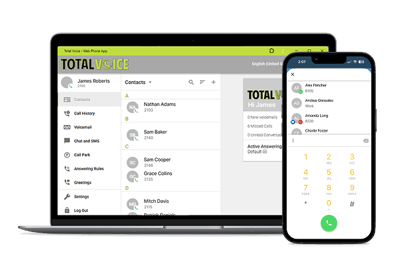
Cloud voice, sometimes called hosted PBX or UCaaS, delivers business calling through the cloud instead of through a physical phone server in your office. Users can place and receive calls through desk phones, laptops, browsers, or mobile apps, while administrators manage users, routing, numbers, and policies through a central portal.
That shift matters because it changes more than where the system sits. It changes how quickly the business can add users, support multiple locations, enable mobile work, respond to outages, and make ongoing changes without turning every adjustment into a project. For businesses coming from older systems like Avaya IP Office, it can also create a much cleaner long-term path.
Built for offices, remote teams, and mobile users
A good cloud voice system should reflect how people actually work now. That means supporting users across locations and devices without bolting on extra complexity every time the business changes.
- Desk phones, softphones, and mobile apps in one environment
- Consistent calling experience across office and remote users
- Easier support for multi-site organizations
- More flexible routing and transfer options
- Better continuity during local outages
- Faster changes when teams, roles, or locations shift
What improves, and what stays familiar
What improves
- More flexible support for remote and mobile users
- Easier administration and user changes
- Less dependence on aging hardware
- Better continuity and failover options
- Cleaner long-term path for reporting and integrations
- More predictable support and day-to-day ownership
What stays familiar
- Business calling remains the core workflow
- Users still place and receive calls the way they expect
- Phone numbers and extensions remain central
- Not every advanced feature has to be turned on at once
- The goal is to improve the environment, not force unnecessary disruption
The platform matters. The service does too.
A lot of providers can sell cloud voice. Fewer stay accountable through planning, implementation, cutover, and support.
Inzo pairs a modern cloud voice platform with decades of voice experience, a U.S.-based team, and a more practical understanding of how communications intersects with network reliability, user support, and day-to-day business operations.
- Planning that reflects the real environment: We document users, devices, routing, numbers, locations, and workflow needs before the transition starts.
- Implementation with clearer ownership: Porting, provisioning, rollout, and cutover should not feel like separate projects owned by different parties.
- Support that stays involved after go-live: We stay engaged so the business is not left sorting through issues alone.
- Broader technical perspective: Communications works better when the provider understands the surrounding infrastructure, support model, and operational demands too.
Who cloud voice is a good fit for
Cloud voice is often a strong fit for businesses that need a more flexible and supportable communications environment, but do not want modernization to turn into unnecessary disruption.
- Businesses running aging PBX or phone hardware
- Teams with remote or mobile users
- Multi-site organizations
- Businesses tired of fragmented communication tools
- Companies looking for a cleaner long-term foundation
- Organizations that want clearer ownership and ongoing support
Common Questions about Cloud Voice
-
What is a cloud voice system for business?
A cloud voice system moves business calling from on-premise hardware into a managed cloud environment, making it easier to support users across offices, remote locations, and mobile devices.
-
What is the difference between VoIP and cloud voice?
VoIP refers to voice calls carried over the internet. Cloud voice uses that technology as part of a broader business communication system that includes administration, routing, voicemail, mobility, and related tools.
-
What is the difference between cloud voice and UCaaS?
Cloud voice typically refers to the calling foundation. UCaaS is broader and can include voice, voicemail, meetings, messaging, presence, mobility, and integrations within one platform.
-
Can cloud voice support remote and mobile users well?
Yes. One of the main advantages of cloud voice is supporting users across office, home, and mobile environments without relying on the same workarounds older phone systems often require.
-
Is cloud voice only for larger businesses?
No. It can be a strong fit for small and mid-sized businesses that need a system that is easier to support, easier to scale, and better aligned with how people work now.
-
Can Inzo help if we are coming from an older on-premise system?
Yes. Many cloud voice conversations start with an older PBX or legacy phone system that still works but is becoming harder to support, expand, or justify long term.
-
Do we need to replace everything at once to move to cloud voice?
Not always. In some cases, a phased transition makes more sense. Timing may depend on contracts, hardware lifecycle, office changes, remote-work needs, or the business’s tolerance for change.
-
What makes Inzo different from other hosted voice providers?
We combine a managed cloud platform with decades of voice experience, dozens of active client environments, and a U.S.-based team that stays involved from planning through support.
Ready to modernize calling without creating more complexity?
Whether you are dealing with aging phone hardware, remote-work friction, or a communications setup that feels more complicated than it should, we can help you evaluate the right next step and make a practical plan.