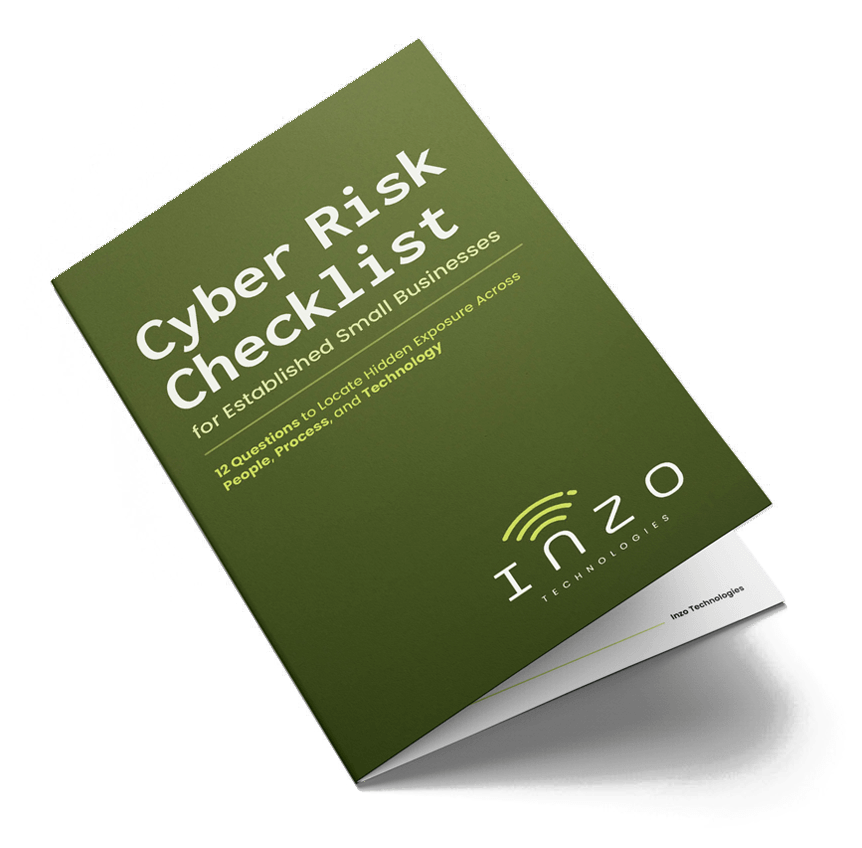
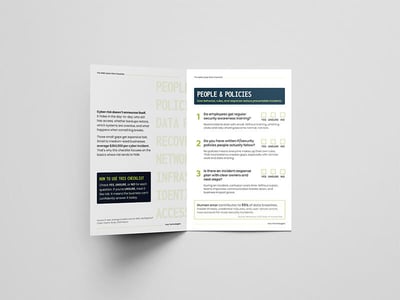
How Inzo helps close the gaps
We can help you turn checklist findings into practical IT and cybersecurity improvements. If your answers raise concerns, we can review them with you, identify the highest-risk gaps, and recommend the next step.
What to do after completing the cyber-risk checklist
Use your answers to build a short action list with your IT and security providers. The checklist starts a discussion; it does not establish that a business is secure or replace an assessment.
- Record evidence and unknowns. For each answer, note the policy, system record or test result supporting it. Keep “not checked” separate from a confirmed gap.
- Identify business impact. List the operations and information affected by each gap, including dependencies on other systems or suppliers. Ask your provider to help prioritize the findings.
- Assign an owner and next action. Agree on who will investigate or fix each item, the target date and any approval or access needed. Keep changes within an authorized scope.
- Review recovery readiness. Ask which systems are backed up, what recent restore tests demonstrated, and who coordinates recovery. Record unresolved dependencies and business-agreed recovery priorities.
- Verify and revisit. Close an item when there is evidence the agreed work is complete. Keep remaining risks visible and set a review date with the person accountable for them.
For a deeper review, see what to prepare for a cyber-risk assessment and our data protection and recovery services. If you suspect an active incident, use your established incident-response contact and process instead of waiting for a routine checklist review.